Sound is all around us—bells ringing, drums beating, people talking, and birds singing. But have you ever wondered how sound is made?
In this lesson, students will learn one simple idea:
Sound is made when something vibrates (moves back and forth).
Those vibrations travel as sound waves, and when the waves reach our ears, we hear sound!
To make learning easy and fun, this blog post includes printable sound worksheets that help kids explore sound through pictures, matching activities, and a quick hands-on experiment.
What Students Will Learn
By the end of these worksheets, students should be able to:
- Explain that sound is made by vibrations
- Understand that sound travels through air as sound waves
- Identify the ear as the body part that helps us hear
- Describe the difference between:
- Loud vs soft sounds
- High pitch vs low pitch
Key Vocabulary (Kid-Friendly)
Vibration
Something moves back and forth (shaking motion).
Sound Waves
Vibrations that travel through the air to our ears.
Ear
The body part that helps us hear sound.
Volume
How loud or soft a sound is.
Pitch
How high or low a sound is.
Quick Explanation: How Sound Is Made
Here’s the easiest way to explain it to kids:
- Something vibrates (like a bell or drum)
- The vibration makes sound waves
- The sound waves travel through the air
- The waves reach your ear
- Your brain understands it as sound
Vibration → Sound Waves → Ear
How Sound Is Made Quick Quiz Worksheet
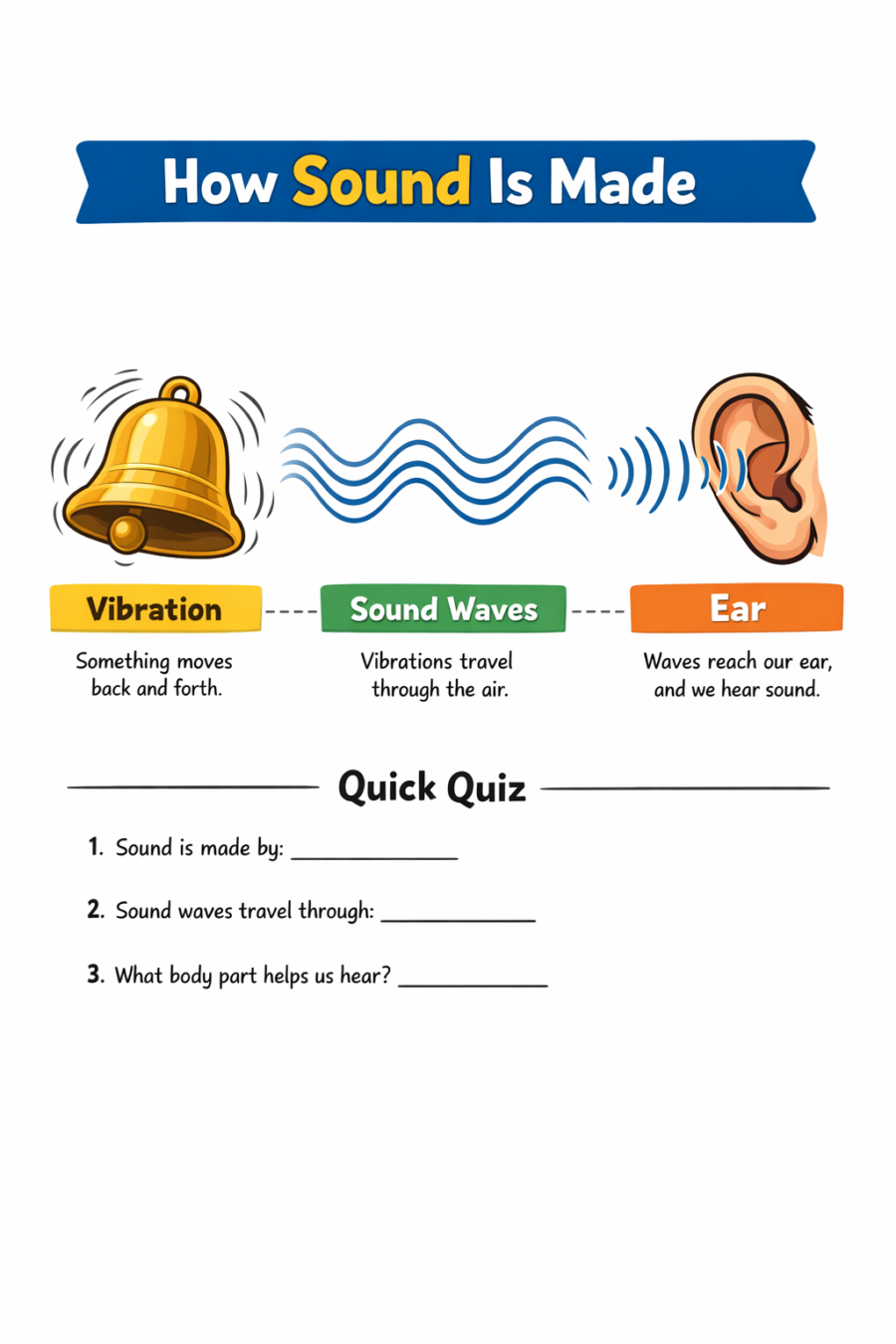
This How Sound Is Made worksheet helps young learners understand the basic science of sound in a simple and visual way. Students will see how vibrations create sound waves that travel through the air and reach the ear, allowing us to hear. The worksheet includes a clear diagram and a short Quick Quiz with fill-in-the-blank questions to check understanding, making it perfect for early elementary science lessons, review activities, or homework.
Explore and Describe How Sound is Made! Worksheet
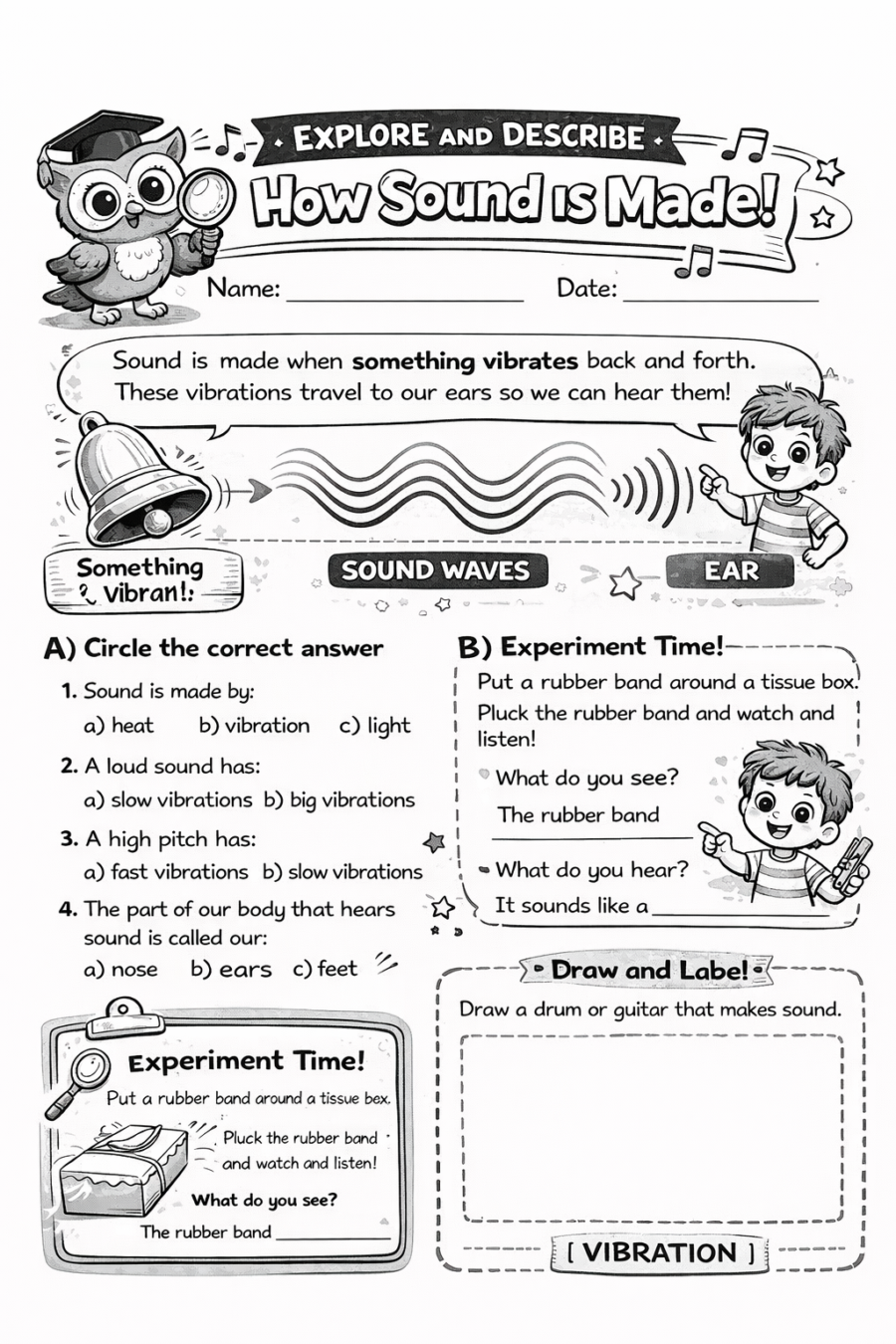
This Explore and Describe: How Sound Is Made worksheet is a fun, interactive science activity that helps students understand that sound is created by vibrations and travels as sound waves to our ears. Learners will practice key concepts by circling the correct answers, completing a simple rubber band experiment to observe and hear vibrations, and finishing with a creative draw-and-label section to connect sound to real instruments. It’s perfect for early elementary classrooms, science centers, or hands-on learning at home.
Explore and Describe How Sound Is Made Worksheet
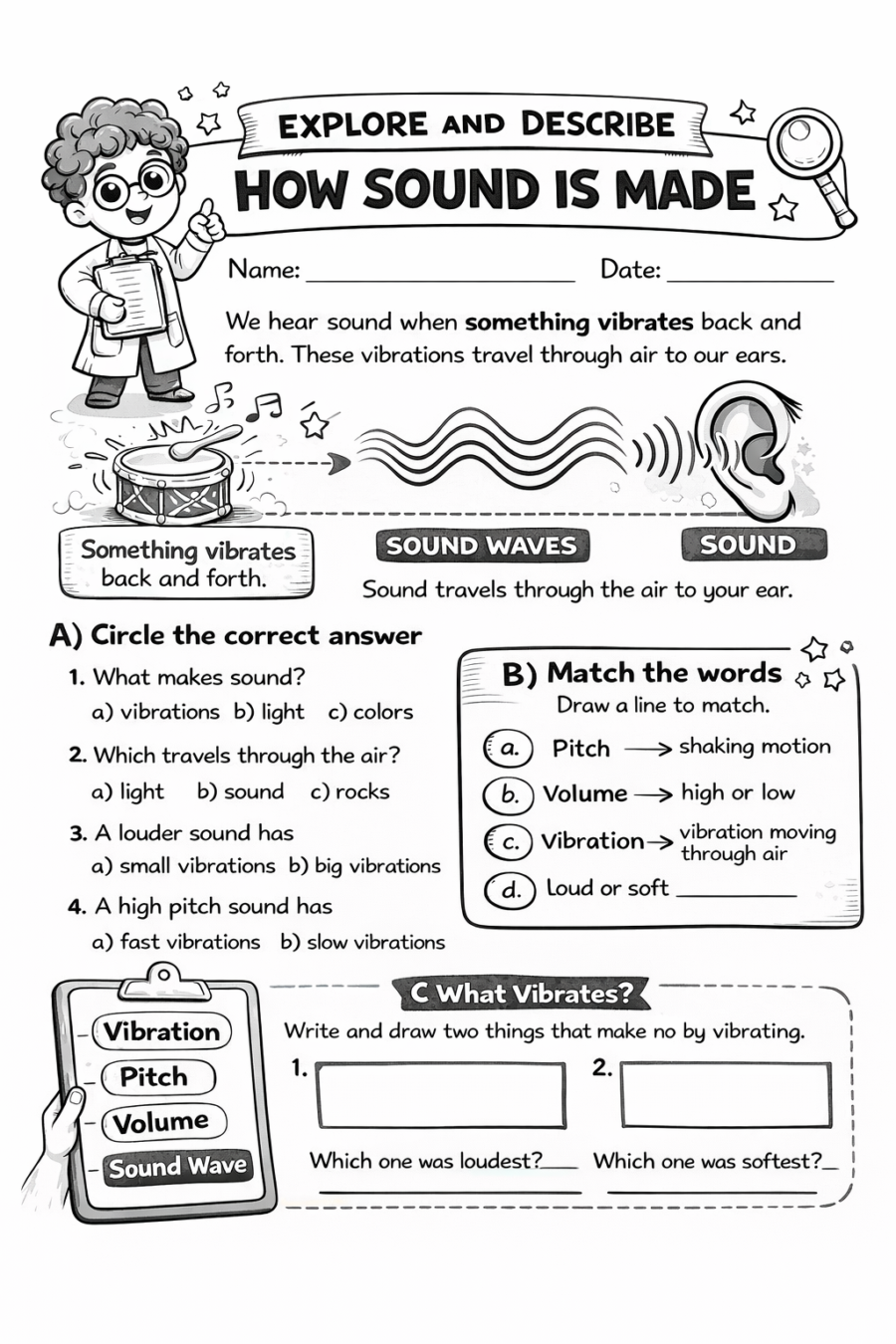
This Explore and Describe: How Sound Is Made worksheet helps students learn the basics of sound in a clear and engaging way. It explains that sound is made when something vibrates, and those vibrations travel through the air as sound waves to our ears. Students will build understanding through a mix of activities, including multiple-choice questions, a matching vocabulary section (vibration, pitch, volume, and sound wave), and a creative prompt where they draw and write examples of things that vibrate. It’s a great printable for early elementary science lessons, review, or independent practice.
How Sound Travels Worksheet
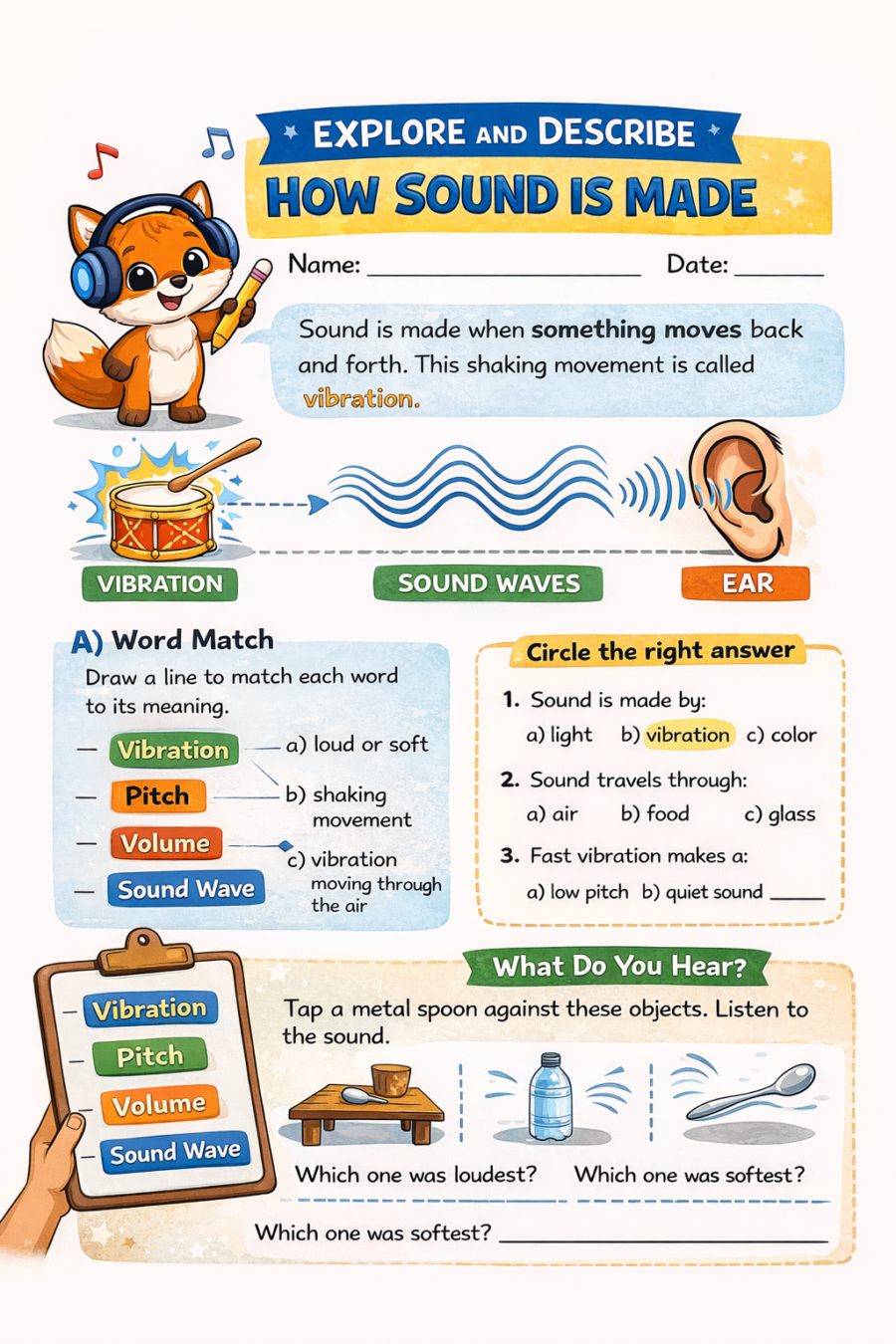
This Explore and Describe: How Sound Is Made worksheet is a colorful and kid-friendly activity that teaches students how sound is created and how it travels. Learners will discover that sound is made when something vibrates, and those vibrations move through the air as sound waves to reach our ears. The worksheet includes engaging practice such as word matching, multiple-choice questions, and a simple listening activity where students tap objects and compare which sound is the loudest or softest. It’s perfect for early elementary science lessons, centers, or at-home learning.
Sound Vibrations and Waves Worksheet
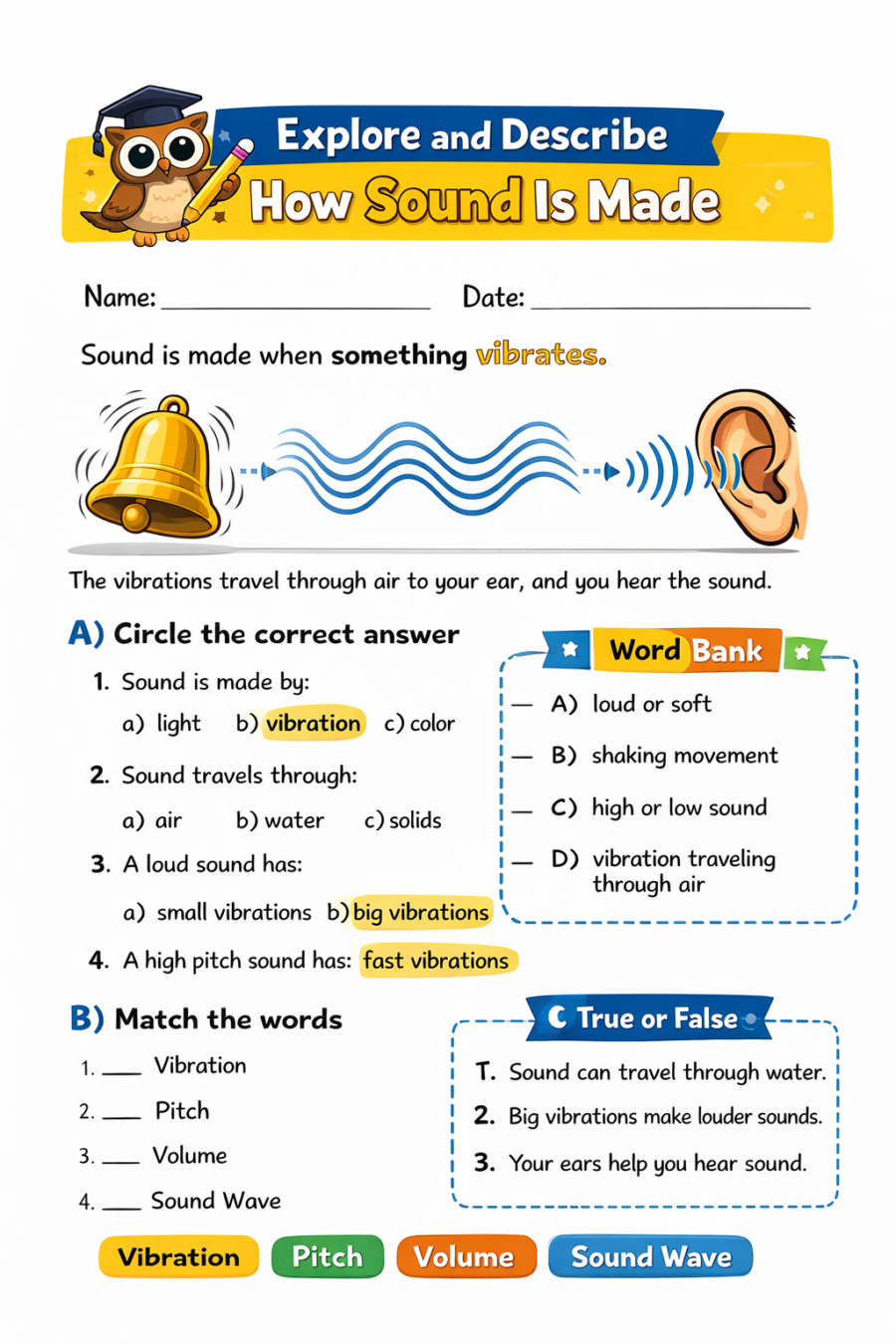
How Sound Is Made: Vibrations and Waves
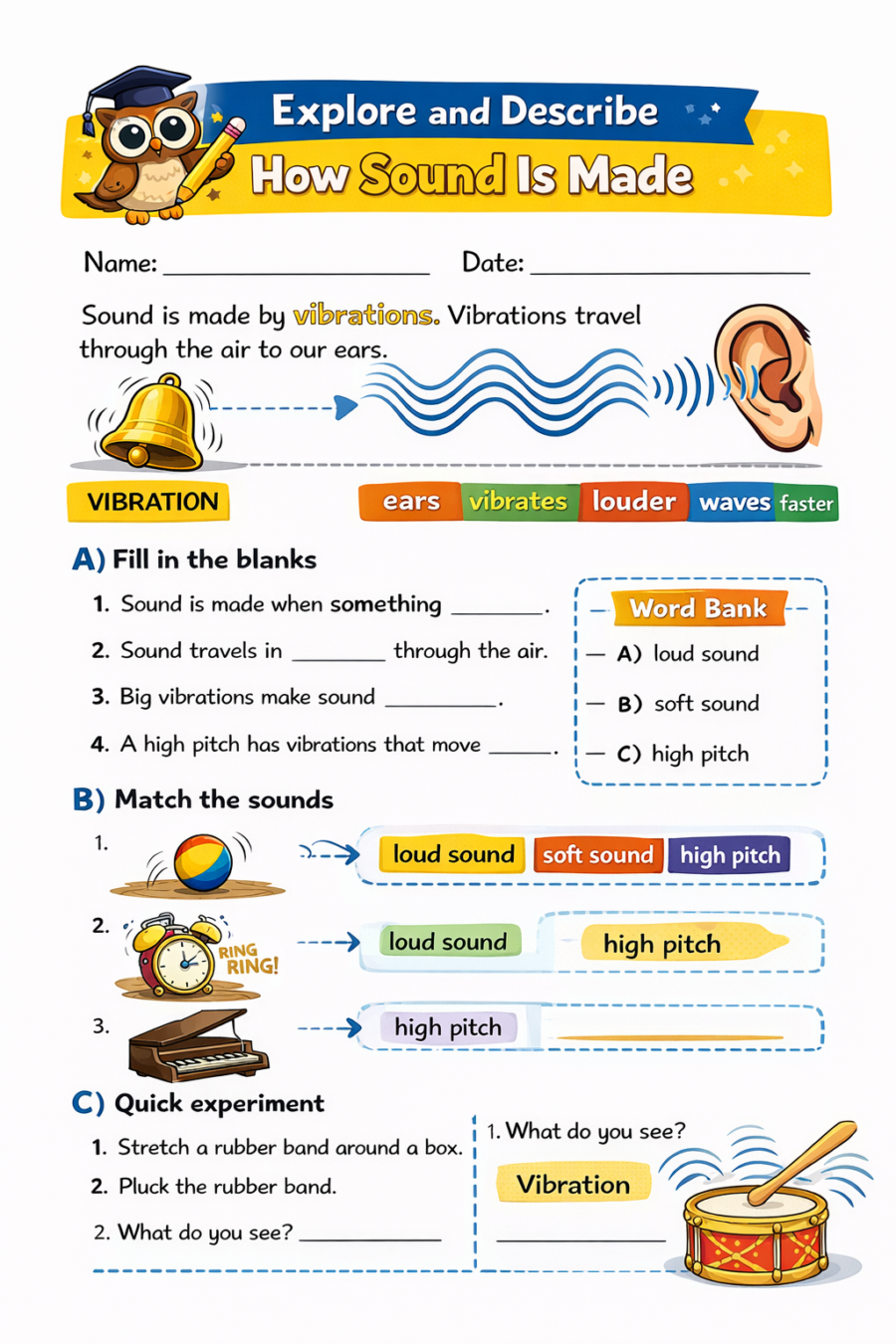
This Explore and Describe: How Sound Is Made worksheet helps students learn how sound is created through vibrations and travels as sound waves to our ears. Using a clear diagram and a helpful word bank, learners complete fill-in-the-blank questions, match different sounds to loud/soft and high pitch, and try a simple rubber band experiment to observe vibrations in action. It’s a fun and easy printable for early elementary science lessons, classroom centers, or at-home practice.